
BoSacks Speaks Out: Perhaps The Children of the Algorithm Want Something Different
By Bob Sacks
Wed, Jun 24, 2026
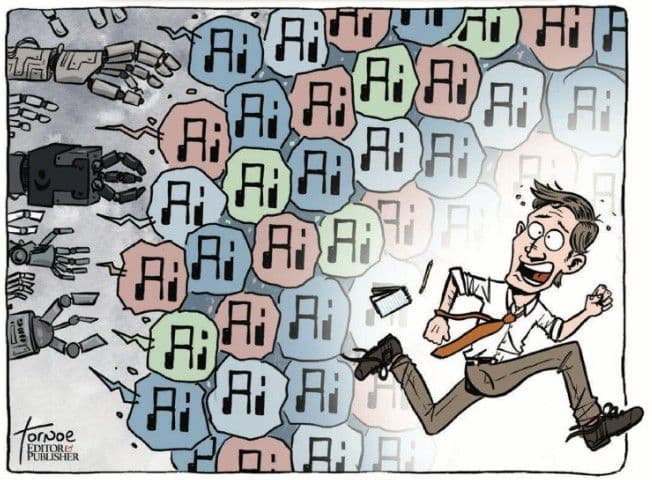
I recently read an intriguing article in the Columbia Journalism Review by Noëlle de Leeuw titled, Something Novel: For Teens, a Print Renaissance Might Be Afoot.
I finished reading it with a smile.
For years, I have listened to people tell me that print is dead, that young people would never again embrace magazines, and that the future belonged entirely to screens and algorithms.
And yet here we are.
According to de Leeuw's reporting, new print magazines are being launched specifically for teenagers. One, called Cuqui,(pronounced “cookie”) plans to charge thirty-five dollars for its first collectible issue and one hundred dollars for an annual subscription. Another, WYouth, (pronounced “double youth”), arrives this fall with the backing of fashion magazine W and filmmaker Sofia Coppola.
Teenagers.
If someone had told me ten years ago that publishers would be launching premium-priced print magazines for Gen Z, I might have questioned whether they had spent too much time staring at their screens.
And yet, perhaps it makes perfect sense.
This generation has grown up entirely inside the digital world. They have never known a time without smartphones, social media, streaming, notifications, and algorithms deciding what they should see, hear, read, and think about next.
Their entire lives have been curated by machines.
Perhaps that is exactly why a magazine suddenly feels fresh.
The evidence is all around us.
Vinyl record sales have exploded among younger consumers who never lived through the original LP era. Independent bookstores, once thought doomed, are opening again across America. Young readers are driving the market for beautifully produced collector editions and special editions of books with sprayed edges and premium bindings. Printed journals and paper planners are enjoying a revival.
The common thread is not nostalgia.
It is intentionality.
I have long argued that digital would become the largest part of the publishing ecosystem and that print would have to reinvent itself. Print could no longer be a commodity. It would have to become something special, something chosen, something worthy of being saved.
I once said simply:
"Print is choice."
These new magazines seem to understand that.
They are not competing with TikTok, Instagram, or YouTube. That would be impossible. You do not beat infinite, free content by trying to become more infinite and more free.
Instead, these publishers are offering something entirely different.
A finite experience.
A curated experience.
An object.
A pause.
A magazine arrives with a beginning and an end. Someone has made editorial decisions on your behalf. Someone has said, "Here is what matters. Here is what we think is interesting. Here is what deserves your attention."
That may be one of the rarest products in modern life.
The data suggest this is not merely a publishing story. It is a cultural story.
Eighty-one percent of Gen Z says they wish it were easier to disconnect from digital devices. More than seventy percent believe physical media and print communications feel more authentic than digital alternatives. An astonishing forty percent say they wish social media had never been invented.
Think about that statistic.
The first generation to grow up entirely online is telling us that it wants less of what it has been given.
Years ago, my friend Drew Davis observed:
"We are in a period of information overload. Just because more information is available doesn't mean we have the time or skill to consume more information."
That observation has only become truer.
We are drowning in information while starving for meaning.
The algorithms know what we clicked yesterday, but they cannot know what might surprise us tomorrow. They are very good at feeding our habits and remarkably poor at expanding our horizons.
Magazines, at their best, have always done exactly that.
A great magazine introduces you to ideas you were not looking for.
It brings together subjects that seem unrelated until an editor, through experience and instinct, creates something unexpected.
That is not a technological function.
That is an editorial function.
And perhaps that is why these young people are showing interest in print again.
Not because they reject technology. They do not.
Not because they are nostalgic. They cannot be nostalgic for something they never knew.
Perhaps they simply want relief.
Relief from the endless scroll.
Relief from the constant demand for attention.
Relief from the feeling that every moment of their lives is being observed, measured, and monetized.
A magazine asks something entirely different of its reader.
Sit down.
Take your time.
Turn the page.
I find that wonderfully hopeful.
For years, our industry has been obsessed with speed, scale, clicks, and algorithms. We chased every new platform and every shiny object, often forgetting the simple value of creating a thoughtful editorial experience.
Now, in one of history's delightful little ironies, the children of the algorithm are rediscovering the appeal of human curation.
Whether these new publications succeed or fail is almost beside the point. What Noëlle de Leeuw's article captures so well is that something unexpected is happening. The first generation raised entirely by algorithms is beginning to search for something algorithms cannot provide: curation, discovery, and a human editorial voice.
Publishing has never been an easy business.
But this moment tells us something important.
People still crave trust, curation, and a sense of discovery. They still value experiences that are tangible, finite, and intentional.
The old magazine formula may never return. Nor should it.
But perhaps something better is emerging.
Years ago, I wrote that a consumer shift was underway from physical ownership toward what I called "cerebral ownership." Increasingly, we pay for access rather than ownership. We stream music instead of buying records. We subscribe to software instead of purchasing it. We rent movies, books, and information. In many ways, we have become subscribers to our own lives.
Which makes these new magazines all the more interesting.
They are not simply selling content.
They are selling something tangible in an increasingly intangible world.
In a world of endless digital abundance, scarcity has become valuable.
In a world of algorithms, human judgment has become a luxury.
And in a world where so much of our culture is rented by the month, perhaps the most rebellious act of all is to hold in your hands something that is truly yours.
Sometimes the future looks remarkably like a printed page.