
BoSacks Speaks Out: Presidents Day, Pamphlets, and the Original Publisher Playbook
By Bob Sacks
Sun, Feb 15, 2026
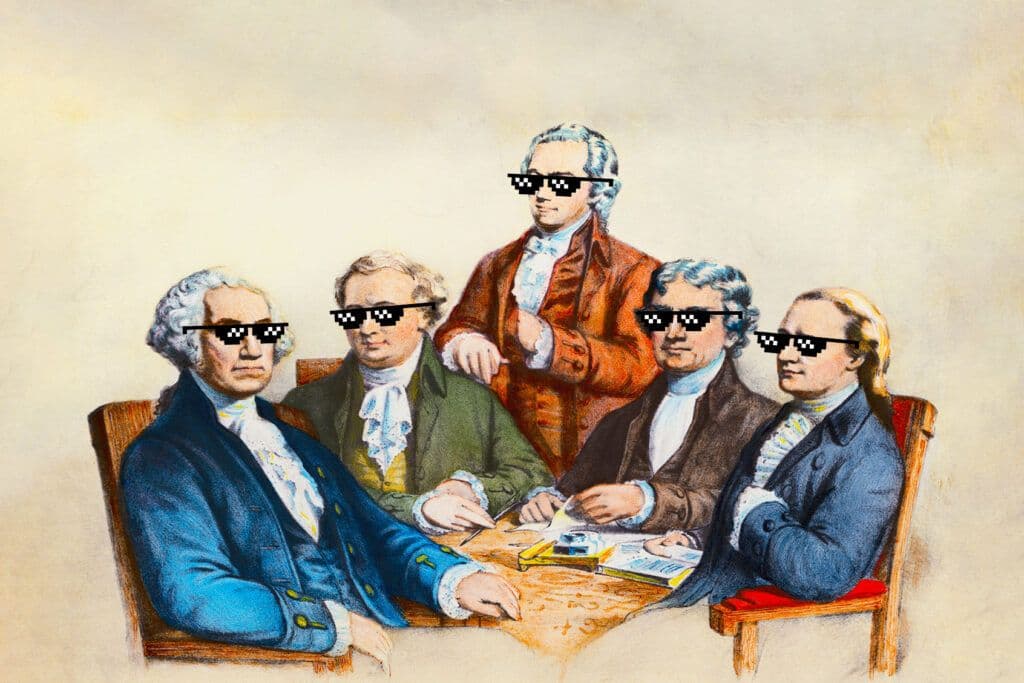
I’m writing this on a rainy Sunday, the quiet stretch before Presidents Day becomes a long weekend of ceremonial patriotism and retail opportunism. I’ll admit something I don’t usually lead with: I have a deep and unapologetic love for reading about the American Revolution. Williamsburg is my happy place. Give me Duke of Gloucester Street, a worn pair of shoes, and a few open print shops, and I’m perfectly content wandering through the smell of ink and the echoes of arguments about taxation, representation, and whether trusting kings ever really works out.
I’ve dragged my family there more times than they’d care to count. I’m the guy reading every plaque, hovering by the press, watching words take form one painstaking letter at a time. There’s something grounding about a world where publishing wasn’t abstract. Where words carried weight, ink cost money, and putting something into print meant you were willing to own the consequences.
The American story wasn’t just political.
It was publishing‑powered.
Because before they were Founding Fathers, they were publishers.
The Publishing Revolution Behind the Political One
The American Revolution didn’t start with a viral clip or a trending slogan. It started with ink, paper, and distribution. It accelerated through printed pamphlets that traveled faster than armies and ideas that spread because someone figured out how to print them cheaply and get them into the right hands.
Thomas Paine’s Common Sense wasn’t just a tract. It was America’s first true bestseller. Scaled to population, nothing has touched it since. It moved through print shops, taverns, and public readings. It didn’t just persuade, it circulated. It didn’t just inspire, it converted. In January 1776, shortly after Common Sense was published, George Washington ordered that the pamphlet be read to Continental Army troops.
Here is what we know.
Washington wrote in a January 31, 1776 letter that Common Sense was “working a powerful change” in public opinion. He recognized immediately that the pamphlet was shifting sentiment from reconciliation with Britain to full independence. That was no small pivot. At that moment, many colonists still hoped for compromise.
In modern publishing terms, this was message discipline. Washington understood morale and narrative mattered as much as muskets. Soldiers fighting a war need to know what they are fighting for.
That’s not an accident.
That’s a publishing case study.
Bo’s case is that the United States wasn’t simply argued into existence. It was published into existence. Long before it was governed, it was distributed.
Paine, Franklin, Jefferson, and the Business of Influence
Thomas Paine understood velocity. He wrote in plain language, priced for reach, and designed his work to be copied, argued over, and passed along. He didn’t wait for virality. He engineered it. His “platform” wasn’t fame; it was a network of printers who shared the mission.
That’s not content creation.
That’s a distribution strategy.
Benjamin Franklin, a great businessman, understood infrastructure before anyone had the vocabulary to ruin the word. Poor Richard’s Almanack, first published in 1732, wasn’t chasing prestige. It was dependable, useful, and familiar. People bought it year after year because it had become an annual habit.
In modern language, Franklin built retention.
Jefferson, for all his contradictions and rhetorical flourishes, knew how to package ideas. He turned enlightenment thinking into portable intellectual property that traveled well beyond colonial borders.
And then there were Madison, Hamilton, and Jay, running a serialized persuasion campaign through newspapers, the Federalist Papers, selling the Constitution to a skeptical and divided audience.
Objective.
Audience.
Conversion.
That’s not political theory.
That’s a media plan.
Why This Still Matters in 2026
So why drag all this up now, when publishers are dealing with collapsing search traffic, algorithmic whiplash, and an AI wave that promises efficiency while quietly erasing attribution?
Because the fight for attention, credit, and compensation never changes. Only the machinery does.
The Founders worried about hostile presses. Today’s hostile press doesn’t argue back. It absorbs. When machines summarize your reporting while stripping away your name, your brand, and your economics, you’re not amplified, you’re ghostwritten.
This isn’t moral outrage.
It’s structural reality.
If your work can be scraped, recombined, and redistributed without attribution or return, you’re not running a media company. You’re running an unpaid data lab.
Franklin would have understood that instantly. So would Paine. Their response wouldn’t be to complain about algorithms. It would be to own the press again, the rights, the relationship, and the revenue.
Because they operated in chaos, too. Misinformation. Propaganda. Limited bandwidth. Ruthless competition.
The Founders’ Playbook for Modern Publishers
Every modern publisher needs a few things they’ve been pretending they don’t.
You need a Common Sense moment, one bold flagship piece that’s short enough to share, sharp enough to quote, and strong enough to pull readers into your world.
You need a Franklin machine, dependable value, recurring utility, and a voice worth paying for again.
You need to treat your archive like what it is: intellectual property. Not old content. Not leftovers. IP. Plate the meal. Charge for dinner.
And you need a sober AI strategy. The threat isn’t plagiarism. It’s invisibility. Stay cited. Stay licensed. Stay seen. Copyright like you mean it.
Presidents Day isn’t only about presidents.
It’s about the system that made them possible, and that system was publishing.
The United States didn’t begin as a social network. It began as a long publishing chain, a network of printers with opinions, courage, and something at stake.
If you’re a publisher in 2026, your job isn’t to fill pages or feed platforms. It’s to build influence that lasts and a business that survives.
Paine didn’t write for applause. Franklin didn’t publish for vanity. Madison and Hamilton didn’t serialize to “raise awareness.” They used the best tools available to control narrative, distribution, and outcome.
You have better technology and worse gatekeepers.
That’s not an excuse.
That’s the assignment.
So this Presidents Day, remember the lesson:
Print something that matters.
Move it deliberately.
Own the relationship or lose the business.
Publishing has never been safe. The founders risked their necks; you risk becoming invisible. If your future depends on a platform you don’t control, a model you didn’t design, or an algorithm you can’t influence, you’re not publishing, you’re hoping.
The founders hoped too.
But they didn’t rely on hope.
They built systems that carried their ideas forward.
And history rewarded that.