
BoSacks Speaks Out: The Washington Post and the Death of a Morning Ritual
By Bob Sacks
Sun, Apr 5, 2026
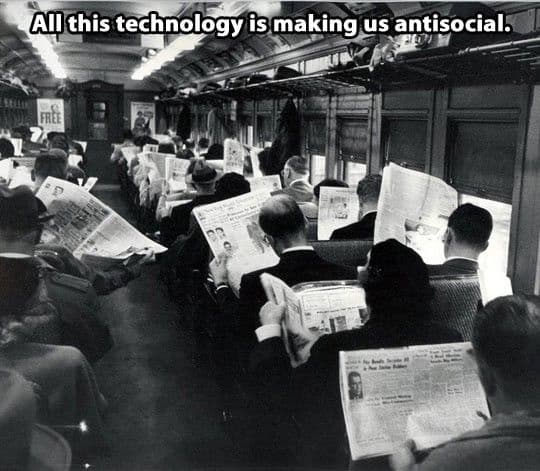
I am a newspaper man.
Not in theory. Not nostalgically. In practice. I have even published a few local newspapers of my own, but that is a different story.
I grew up with newspapers the way other people grew up with television humming in the background. Papers were handled, folded, argued over, and smelled. They were not accessories. They were how adults made sense of the world.
My father rode the railroad an hour each way to work. He never boarded without a newspaper in his hands. At home, the New York Times arrived in the morning, the evening edition of the New York Post followed later, and Newsday filled in the local gaps. I knew that paper especially well. I was a Newsday paper boy.
That daily stack of ink and paper taught me something long before I understood it intellectually. Serious people read the news. They lived with it.
That lesson came rushing back when I read Rob Tornoe’s piece in Editor & Publisher detailing the slow, self-inflicted erosion of The Washington Post.
Since moving to Charlottesville, I had built what I consider a civilized routine. Breakfast. Coffee. Then a disciplined read through The Washington Post, The New York Times, and The Wall Street Journal, usually in that order. About forty-five minutes or so of quiet attention before the workday began. My commute now is about twenty-five feet from kitchen to office, one of the quieter rewards of aging.
That ritual now feels damaged.
Here is the truth, stated plainly. I still trust the Times a mostly liberal paper. I still trust the Journal a mostly conservative paper. I no longer fully trust The Washington Post.
That is not a partisan statement. It is not liberal or conservative. It is about expectation.
Readers sign up for a newspaper with an understanding of what it is, how it thinks, and how it behaves. They do not expect perfection. They do expect continuity. When that continuity breaks, trust breaks with it.
I still read the Post every morning. Old habits and genuine affection do not vanish overnight. But I now read it differently. With caution. With skepticism. With a small but persistent question sitting beside the coffee cup. Is this still the paper I signed up for?
Jeff Bezos answered that question when he began inserting himself into the editorial bloodstream. His increasingly visible appetite for political influence, capped by the last-minute decision to kill the paper’s endorsement of Kamala Harris, was not just a business decision. It was a change in perspective. Readers noticed. More than 375,000 of them reportedly canceled in a short period of time.
That was not churn.
That was recognition.
What was lost in that moment was not simply revenue. It was confidence. And confidence is the only currency that journalism truly trades in.
There is a direct parallel here to what has happened at CBS News. Viewers did not leave because the network leaned left or right. They left because the product no longer matched what they believed they were getting. The tone changed. The framing changed. The perspective shifted. What viewers had known and trusted quietly disappeared.
When an institution changes its perspective without acknowledging it, audiences do not debate it. They do not argue about ideology. They make a simpler decision. They stop showing up.
This is the mistake media executives continue to make. They explain audience loss through politics when the real issue is expectation. People want what they signed up for. They want the same voice, the same posture, the same relationship. They are not looking for agreement. They are looking for recognition.
The Washington Post is now living inside that same dynamic.
Readers can feel when the weather changes inside a newsroom. They may never see internal memos or boardroom conversations, but they know when editorial judgment starts sharing space with ownership interest and political calculation. Credibility is not an abstraction. It is a daily transaction. When the terms change, readers respond.
Tornoe’s reporting lays out the consequences clearly. A newsroom hollowed out. Sports coverage eliminated. Photojournalism dismantled. Experienced reporters pushed out while the world grows more dangerous and more complicated. This is happening under the ownership of the same man who once earned praise for personally intervening to free Jason Rezaian from an Iranian prison.
The contrast is stark.
What once felt like stewardship now feels like possession. The Washington Post no longer presents itself as a civic trust. It feels like an asset, one that must occasionally bend to interests that have nothing to do with journalism.
That is not how great newspapers survive.
One idea in Tornoe’s piece deserves serious attention. The nonprofit model. It is no longer theoretical. The Philadelphia Inquirer, The Salt Lake Tribune, and The Baltimore Banner are all proving that separating journalism from the ego and entanglements of a single wealthy owner is not charity. It is strategy.
Bezos could endow The Washington Post for generations without noticing the money. The real question is not financial. It is moral. Does he value independence more than control.
Then there is sports, which too many executives still dismiss as expendable. That is a profound misunderstanding of why people read newspapers. Sports coverage is habit journalism at its purest. It creates daily engagement and deep loyalty.
In Washington, the Commanders alone justify a serious sports desk. Cutting sports coverage while maneuvering for favor with a hostile political class is not just bad editorial judgment. It is bad business.
Even more telling, nonprofit startup The Baltimore Banner understands this. It is expanding into the D.C. market and adding Commanders coverage while The Post retreats. When the startup sees opportunity faster than the legacy institution, the legacy institution is not adapting. It is surrendering.
But the deepest wound is local coverage.
Before Bezos, The Washington Post was not just a national paper. It was a regional institution. It knew Washington. It understood zoning fights, school boards, Metro failures, neighborhood tensions, and the everyday mechanics of civic life. That reporting did not always win awards, but it earned trust.
A newspaper that truly knows its community becomes part of that community’s memory.
That is what my father was reading on that Long Island railroad platform. He was reading the world, yes. But he was also reading his world. That distinction matters.
I carried that lesson with me from New York to Virginia. I still believe in the morning ritual. I still believe in sitting down with serious journalism before the day begins shouting. Newspapers, at their best, do more than inform. They orient. They connect. They steady the mind.
That is why the decline of The Washington Post feels personal. Not because newspapers are shrinking. They have been shrinking for years. But because this one appears to be abandoning the covenant that made it matter. Independence. Public service. A consistent, honest relationship with readers.
Once that covenant cracks, no redesign, no audience strategy, no product pivot will save you.
A newspaper is not just a collection of articles.
It is a ritual of trust.
And when readers stop believing in the ritual, the presses may still run, the website may still update, and the owner may still smile for the cameras.
But something essential is already gone.
This was never about left or right.
It was about expectation.
Readers want what they signed up for.
When it disappears, so do they.