
BoSacks Speaks Out: Why So Much AI? Because It Is Already in the Room
By Bob Sacks
Wed, Jul 1, 2026
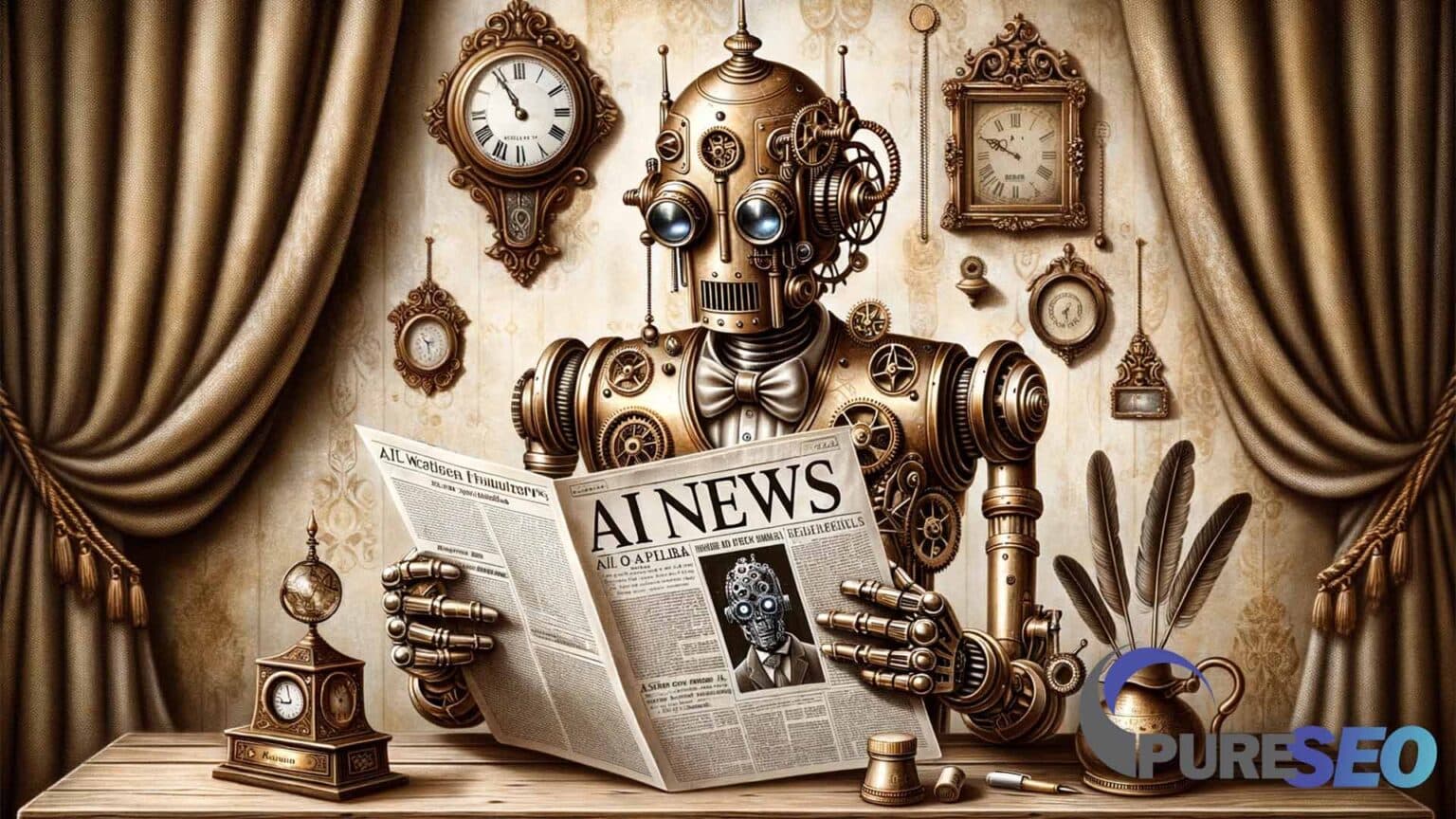
I received a note from one of my oldest readers, a man who still works in the industry and has been paying attention for a very long time. I will paraphrase him here: “Oh no, three articles about AI.”
I smiled when I read it. I also winced a little. Not because he was wrong to ask the question, but because it is a fair question. If a loyal reader notices a pattern, then the pattern deserves an answer.
I have been pondering that comment for a few days, and I have come to several conclusions.
First, the number of serious sources covering the publishing industry has become painfully limited, especially in the United States. Europe still has several publishing resources that seem to be alive, useful, and in some cases prospering. In the United States, not so much.
To be fair, Editor & Publisher still has a powerful website and continues to publish a print magazine, and I am glad it does. It remains one of the great survivors of the trade press, with roots deep enough to hit bedrock. But Editor & Publisher is primarily focused on newspapers and the broader news media business, not the magazine industry specifically. That distinction matters. Newspapers and magazines are cousins, sometimes close cousins, but they are not twins. They share challenges, technologies, advertisers, readers, and existential migraines, but the magazine business has its own economics, rhythms, production realities, circulation issues, audience relationships, and editorial traditions. We still need trade coverage that looks directly at magazines, not merely at publishing in the broadest possible sense.
I miss Folio:. I miss Publishing Executive. I was a monthly columnist for Publishing Executive, and I wrote a few pieces for Folio: as well. Those publications mattered. They were not just trade magazines. They were gathering places for professional intelligence. They explained the business to itself.
And here is a little reminder from a different publishing universe: it was once profitable to publish a magazine called Circulation Management. Imagine that. A monthly trade magazine devoted to magazine circulation, audience development, fulfillment, audits, subscriber acquisition, and all the invisible machinery that kept the publishing engine running. There was once enough advertising, enough readership, enough professional need, and enough industry confidence to support a magazine about circulation management.
That was not a side alley of publishing. That was a vital road.
Those magazines were valuable sources of industry information. We still need that information. In some ways, we need it more than ever. But the ecosystem that supported those publications has been weakened. The printing industry consolidated. Vendors serving magazines consolidated, disappeared, merged, or shifted their marketing dollars elsewhere. The advertising that once sustained trade magazines and trade events declined along with the vendor base. When the suppliers fade, the trade press that depended on them fades too.
That is one of the great under-discussed losses in our business. We did not just lose publications. We lost professional memory. We lost common reference points. We lost places where the industry could argue with itself in public, learn from itself, and occasionally be embarrassed into improvement.
To be fair again, not everything vanished. The Folio: Eddie & Ozzie Awards are still very much alive. Since 1972, those awards have recognized editors, journalists, art directors, and designers whose work sets a standard for publishing. They remain open to consumer, B2B, association, nonprofit, custom, city and regional publications, as well as international entries. That continuity matters. Awards do not replace trade journalism, but they do remind us that excellence still exists, and that someone should still be keeping score.
But back to the original complaint: why so much AI?
The simple answer is that I scan the web every day for worthwhile articles to pass along, and right now the publishing world, the business world, the technology world, and the media world are all covering AI from stem to stern. It is not because I have become the house organ for the robots. It is because the robots have wandered into every department of the publishing house and started asking for passwords.
AI is no longer a distant topic. It is not a futurist’s parlor game. It is not something we can file under “interesting, but not urgent.” It is already touching editorial, design, audience development, advertising, search, traffic, licensing, production, archives, customer service, analytics, and every poor soul who sits at a computer trying to get through the day without twelve new software updates.
Editors are asking whether AI can summarize, rewrite, translate, headline, and package content.
Publishers are asking whether AI companies are stealing their archives, destroying search referral traffic, or creating new licensing opportunities.
Advertisers are asking whether AI can generate campaigns faster and cheaper.
Designers are watching image generators produce layouts and illustrations at a speed that is both impressive and unsettling.
Audience teams are watching search behavior change before their eyes.
Journalists are asking where assistance ends and substitution begins.
Lawyers are asking who owns what, who trained on what, and who gets paid for what.
And readers, bless them, are already living inside AI-driven systems whether they know it or not.
So yes, there are many AI stories. There should be. Any publishing professional who is not studying AI right now is not being prudent. He is standing on the beach complimenting the pretty wave.
That does not mean every AI story is useful. Much of the coverage is inflated, repetitive, breathless, or written by people who discovered publishing sometime after lunch. Some of it reads as if the author asked ChatGPT to write an article about ChatGPT replacing articles about ChatGPT. That is not progress. That is a hall of mirrors with better punctuation.
But beneath the hype is a genuine structural shift. AI is changing how information is found, summarized, packaged, valued, and monetized. That is not a side issue for publishers. That is the entire store.
For decades, publishers built their businesses around controlling valuable information, organizing it, editing it, distributing it, and attracting readers to it. Search engines changed that. Social platforms changed it again. Now AI threatens to change it more profoundly, because it does not merely direct people to information. It can absorb, summarize, reframe, and deliver the answer without sending the reader back to the original source.
That is not a minor traffic problem. That is a value-chain problem. It goes to the heart of our business.
This is why I keep returning to AI. Not because I believe it is magic. Not because I believe it is evil. Not because I think every publisher should fire half the staff and replace them with a blinking cursor. I keep returning to it because AI may become the most consequential publishing tool, competitor, assistant, thief, partner, intern, vandal, and opportunity of our lifetime.
Pick your noun carefully. Several may be true at once.
I have called myself a futurist for more than three decades, though I have always preferred the practical version of futurism. I am less interested in flying cars than in whether the circulation department can still afford postage. The future is never abstract in publishing. It arrives as a budget meeting, a paper shortage, a postal increase, a platform policy change, a search algorithm update, or a tool that suddenly makes yesterday’s workflow look like a butter churn.
And here is the honest truth: I do not know what AI will become in five years, let alone ten.
That is not an admission of defeat. That is a statement of respect for the scale of the change. Anyone who tells you with certainty what AI will look like in 2031 is either selling software, raising venture capital, or has had a little too much coffee with the consultants.
What I do know is this: publishers cannot afford to ignore it.
We need to study AI with clear eyes. We need to use it where it improves productivity. We need to reject it where it weakens quality, steals value, or breaks trust. We need licensing models. We need ethical standards. We need transparency. We need to know when a tool is helping the editor and when it is pretending to be one. We need to protect the work, but we also need to learn the tools. Standing still is not a strategy. It is just decline with better posture.
So to my old reader who groaned at three AI articles, I understand. I really do. I sometimes groan too.
But here is the problem: AI is not one story. It is becoming part of every story.
It is a copyright story. It is a labor story. It is a search story. It is a trust story. It is a production story. It is an advertising story. It is an audience story. It is a business model story. It is, whether we like it or not, a publishing story.
And as long as I am scanning the horizon for this industry, I am going to keep pointing at the storm clouds, the sunlight, and the strange mechanical bird flying overhead.
Because the job is not to make readers comfortable.
The job is to make sure we are not surprised by the future after it has already moved into the spare bedroom.